Safety Benefits of Grounding Industrial Delta Transformers
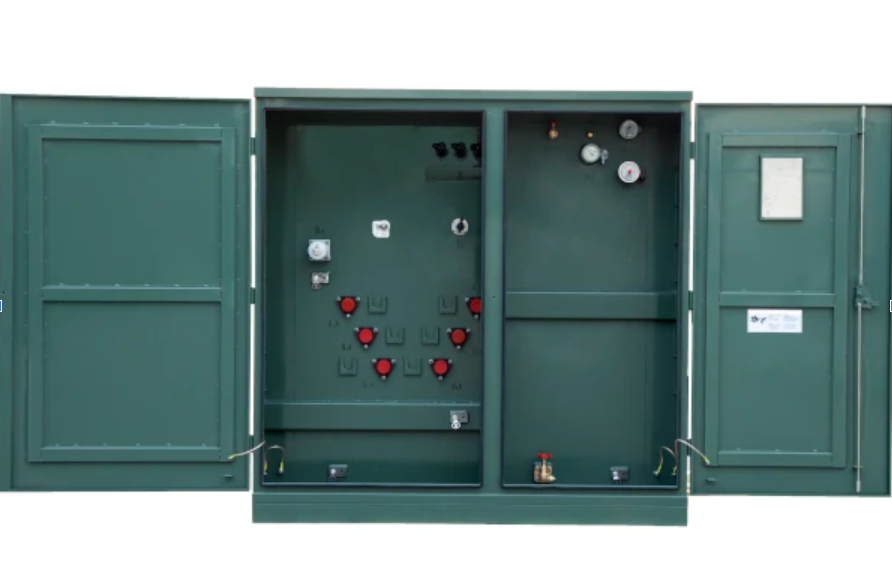
Industrial power systems rely on robust transformer configurations to ensure stable and continuous operations across manufacturing plants, processing facilities, and heavy industries. Among these configurations, delta-connected transformers are widely used due to their ability to handle unbalanced loads and provide reliable three phase power.
However, an ungrounded or improperly grounded delta system can introduce significant safety risks such as overvoltage events, insulation stress, and undetected faults. This is why grounding transformers are a critical addition in many industrial delta transformer setups. By creating a stable reference point to earth and enabling controlled fault current flow, grounding improves both electrical safety and equipment protection.
Understanding the safety benefits of grounding industrial delta transformers helps engineers, plant managers, and maintenance teams reduce hazards and maintain compliant operations.
Understanding Delta Transformer Configurations
A delta transformer connection links the three winding phases in a closed loop resembling a triangle. This configuration is common in industrial environments because it supports high power loads and can continue operating even if one phase becomes impaired. Delta systems also reduce third harmonic currents within the windings, which enhances power quality in certain applications.
However, unlike wye connected systems, a pure delta configuration does not inherently provide a neutral reference to ground. Without grounding, the system can float relative to earth potential. This floating condition creates uncertainty in phase to ground voltages and makes it difficult to detect single line to ground faults. As a result, safety hazards may persist unnoticed until they escalate into major failures.
Why Grounding Is Necessary in Delta Systems
Grounding establishes a defined relationship between the electrical system and earth potential. In delta systems, grounding is often achieved using a grounding transformer such as a zigzag or wye delta grounding unit. These devices introduce a neutral point that can be connected to ground, stabilizing the system voltage and enabling protective devices to operate correctly.
When a delta system is grounded, fault currents have a predictable path to earth. Protective relays and circuit breakers can then detect abnormal conditions and isolate faults quickly. This controlled response significantly reduces the likelihood of equipment damage, fire, or electric shock hazards.
Safety Risks of Ungrounded Delta Transformers
Ungrounded delta transformers were historically used in some industries to maintain continuity during single line to ground faults. While this approach can allow temporary operation during a fault, it introduces several serious safety concerns.
- Transient overvoltages can occur due to arcing ground faults
- Insulation stress increases because phase voltages shift relative to ground
- Faults may remain undetected, allowing hazardous conditions to persist
- Maintenance personnel face higher shock risk due to unstable ground reference
These risks are especially problematic in modern industrial facilities where automation, sensitive electronics, and strict safety standards require predictable electrical behavior.
How Grounding Transformers Improve Fault Detection
One of the primary safety benefits of grounding industrial delta transformers is reliable ground fault detection. When a grounding transformer is installed, it creates a neutral point connected to earth through a resistor or directly, depending on the design. This connection allows ground fault current to flow in measurable quantities.
Protective relays monitor this current and detect deviations from normal operation. Once a fault is detected, the protection system can trip breakers and isolate the affected section. Rapid fault clearing prevents escalation into multi phase faults or catastrophic equipment failure.
Grounding transformers also enable selective coordination. Only the circuit nearest the fault is disconnected, preserving power to unaffected areas and maintaining operational safety.
Reduction of Transient Overvoltages
In ungrounded delta systems, intermittent ground faults can produce high transient voltages due to resonance between system capacitance and inductance. These overvoltages can exceed insulation ratings and damage cables, motors, and switchgear. They also increase the risk of arc flash incidents.
Grounding stabilizes the system voltage relative to earth. By limiting the rise in phase to ground voltage during a fault, grounding transformers protect insulation and reduce electrical stress. This stabilization is especially important in facilities with long cable runs or extensive motor networks, where capacitance to ground is significant.
Improved Personnel Safety
Electrical safety in industrial environments depends heavily on predictable voltage conditions and effective fault clearing. Grounding industrial delta transformers contributes to personnel safety in several ways.
- Establishes a stable reference to ground, reducing touch voltage hazards
- Enables protective devices to clear faults before exposure escalates
- Minimizes arc flash energy by limiting fault duration
- Reduces likelihood of unexpected energized equipment frames
Maintenance workers, electricians, and operators benefit from a grounded system because exposed conductive parts remain closer to earth potential under fault conditions. This reduces shock risk during inspection or repair activities.
Compliance With Modern Electrical Standards
Industrial electrical codes and standards increasingly favor grounded systems for safety and reliability. Organizations such as IEEE and IEC recommend grounding practices that enable effective fault detection and voltage stabilization. Many regulatory frameworks also require grounding in facilities with high power equipment or hazardous processes.
Grounding industrial delta transformers helps facilities meet these safety expectations. Compliance reduces legal liability and ensures that installations align with recognized engineering practices. It also supports certification audits and insurance requirements tied to electrical safety performance.
See also: 10 Groundbreaking Technologies to Watch in 2025
Protection of Equipment and Infrastructure
Grounding not only protects people but also safeguards expensive industrial equipment. Transformers, motors, drives, and control systems are sensitive to abnormal voltages and prolonged faults. A grounded delta system reduces the likelihood of damage by enabling faster fault clearing and limiting voltage stress.
Stable grounding also improves the lifespan of insulation systems. Cables and windings experience more consistent voltage distribution, reducing partial discharge and dielectric degradation. Over time, this contributes to improved reliability and lower maintenance costs.
Types of Grounding Transformers Used in Delta Systems
Several grounding transformer designs are commonly used to ground delta systems. Each type provides a neutral reference while maintaining system performance.
Zigzag grounding transformers are widely used because they create a neutral point without supplying load current. Their winding arrangement cancels phase currents while allowing zero sequence current to flow during ground faults.
Wye delta grounding transformers are another option. The wye side provides a neutral that can be grounded, while the delta side connects to the system. These units can also supply auxiliary power if needed.
The choice depends on system size, grounding method, and fault current requirements. Regardless of type, the safety benefits arise from establishing a controlled ground reference.
Grounding Methods and Their Safety Impact
Grounding transformers can be connected to earth in different ways depending on desired fault current magnitude and protection strategy.
- Solid grounding connects the neutral directly to earth, allowing high fault current and rapid clearing
- Resistance grounding inserts a resistor to limit fault current and reduce arc flash energy
- Reactance grounding uses inductive impedance to control current and voltage rise
Resistance grounding is common in industrial delta systems because it balances fault detection with reduced equipment stress. The selected method influences relay settings and safety performance across the facility.
Role in Arc Flash Risk Reduction
Arc flash events are among the most dangerous electrical hazards in industry. Their severity depends on available fault current and clearing time. Grounding industrial delta transformers helps mitigate arc flash risk by enabling faster detection of ground faults and more predictable current levels.
With a grounded system, protective relays respond quickly to abnormal currents. This reduces fault duration and the energy released during an arc event. Grounding also stabilizes voltages that might otherwise contribute to insulation breakdown and arc initiation.
Facilities that implement proper grounding often achieve lower arc flash incident energy levels, improving worker safety and simplifying protective equipment requirements.
Enhancing System Stability and Monitoring
Grounded delta systems are easier to monitor and maintain. Voltage measurements relative to ground become meaningful, allowing technicians to detect imbalance or insulation deterioration early. Condition monitoring devices such as ground fault indicators and insulation monitors function more effectively when a defined ground reference exists.
This improved visibility supports preventive maintenance and reduces unexpected outages. From a safety perspective, early detection of insulation failure or leakage current prevents dangerous escalation into major faults.
Industrial Applications That Benefit Most
Grounding industrial delta transformers is particularly important in facilities with high power density, extensive cabling, or hazardous processes. Industries that benefit strongly include manufacturing plants, petrochemical facilities, mining operations, and data centers with large motor loads.
These environments demand reliable fault protection and stable voltages to protect both people and processes. Grounded delta systems support continuous operation while maintaining safety integrity across complex electrical networks.
Conclusion
Grounding industrial delta transformers provides essential safety advantages in modern industrial power systems. By establishing a stable reference to earth, grounding transformers enable reliable fault detection, reduce overvoltages, and improve protection coordination. These effects lower risks of electric shock, arc flash, and equipment damage while supporting compliance with electrical standards.
In delta connected systems where no inherent neutral exists, grounding transforms an otherwise floating network into a predictable and controllable electrical environment. The resulting improvements in personnel safety, equipment protection, and system stability make grounding a fundamental practice in industrial electrical engineering.